The Messy Middle is Dead. Long Live the Messy Algorithm
In 2020, Google published research on the “Messy Middle”—the chaotic, non-linear space between a consumer’s trigger moment and their eventual purchase. The model showed how people endlessly loop between exploration (expanding options) and evaluation (narrowing options), influenced by cognitive biases at every turn.
It was a breakthrough framework. And it’s already becoming obsolete.
What Changed
The Messy Middle assumed a human doing research. A person bouncing between tabs, reading reviews, asking friends, revisiting comparison sites, second-guessing themselves at 2 AM.
But increasingly, that human is delegating the messy part to an AI agent.
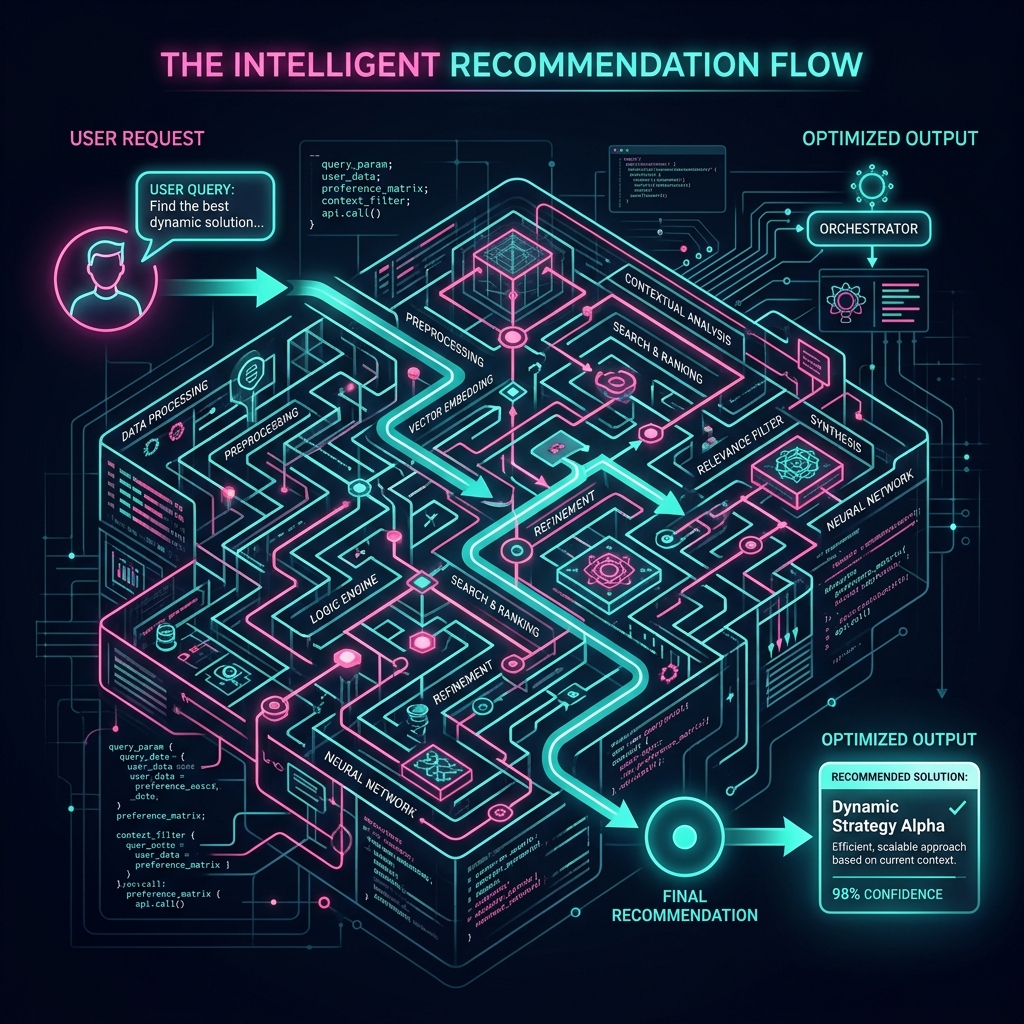
“Hey, find me the best CRM for a 50-person sales team under $100/seat.” The AI doesn’t loop. It doesn’t second-guess. It queries, evaluates, ranks, and recommends. The “messy middle” collapses into a structured retrieval and scoring operation.
The Messy Algorithm
What replaces the Messy Middle isn’t clean—it’s just differently messy. I call it the Messy Algorithm.
Here’s how it works:
1. The Trigger Is the Same
A human still has a need. They still experience the initial spark that starts the journey. This hasn’t changed.
2. The Exploration Phase Becomes Retrieval
Instead of browsing, the AI agent retrieves information from structured sources: knowledge graphs, review databases, product APIs, and machine-readable content. The brands that are queryable (see: structured data, llm.txt, explicit claims) get retrieved. The brands that aren’t get skipped entirely.
3. The Evaluation Phase Becomes Scoring
Instead of the human applying cognitive biases (authority, social proof, scarcity), the AI applies scoring criteria. “Which option has the highest review density? Which offers the best value per feature? Which has the most relevant case studies?”
The biases still matter—but they’re applied programmatically, not emotionally.
4. The Recommendation Replaces the Decision
Here’s the killer insight: the AI doesn’t decide for the human. It pre-decides. It presents a ranked shortlist of 2–3 options with clear rationale. The human’s “decision” is really just validation of the AI’s recommendation.
This means the real purchase decision happens inside the algorithm, not inside the human’s head.
What This Means for Marketers
Your Content Strategy Must Change
The Messy Middle rewarded content that engaged humans during exploration—listicles, comparison guides, interactive tools. The Messy Algorithm rewards content that informs machines during retrieval—structured data, explicit claims, authoritative citations.
Your Funnel Model Must Change
The traditional funnel (Awareness → Consideration → Decision) assumed human attention at every stage. In the Messy Algorithm, the human is only present at the trigger and the validation. Everything in between is machine-mediated.
Your Competitive Moat Must Change
In the Messy Middle, brands won through emotional resonance and repeated exposure. In the Messy Algorithm, brands win through information density and structural authority. The question isn’t “do they remember us?” but “can the machine find us and rank us favorably?”
The Hybrid Reality
We’re not fully in the Messy Algorithm era yet. Plenty of purchases still involve traditional human research. But the trend line is clear: every quarter, more of the “messy middle” gets delegated to machines.
The marketers who recognize this shift and start building for it now will have a structural advantage that compounds over time. The ones who keep optimizing for human browsing behavior will wonder why their traffic is declining while their competitors’ revenue is growing.
The middle isn’t messy anymore. It’s computed.