Zero-Click SEO: Winning When Nobody Visits Your Website
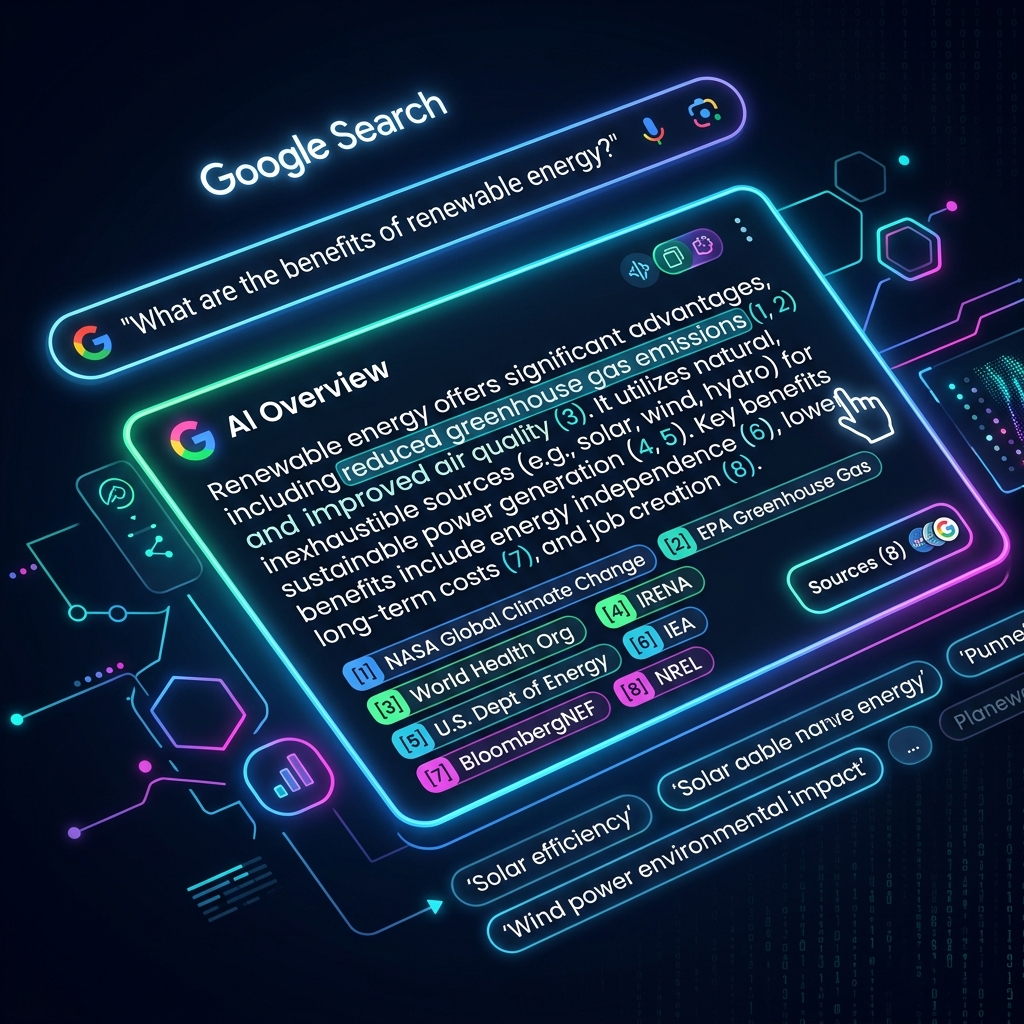
The uncomfortable truth of modern SEO: your best content strategy might result in fewer website visits.
Google’s AI Overviews now answer complex queries directly in the search results. Featured snippets pull your content and display it without a click. Knowledge panels aggregate your brand information and present it as definitive truth.
The old SEO game was: rank → get clicked → convert. The new SEO game is: get cited → build authority → get chosen.
The Zero-Click Reality
Studies consistently show that over 60% of Google searches now end without a click to any website. The user gets their answer directly from the SERP. For many queries, the “best” result is the one Google quotes—and the user never visits the source.
This terrifies traditional SEOs. But it shouldn’t terrify marketers. Because clicks were never the real goal. Influence was.
The Zero-Click Strategy
1. Optimize for the Citation, Not the Click
When Google’s AI Overview answers “What is value-based bidding?”, it cites sources. Your goal is to be one of those sources. The citation may not drive a click, but it builds associative authority: the user’s brain connects your brand with expertise on that topic.
To get cited:
- Lead with the answer. First paragraph should directly answer the query. No preamble.
- Use structured formatting. Numbered lists, tables, and clear headers are easier for AI to extract.
- Be the most specific source. Generic content gets aggregated. Specific, practitioner-level detail gets cited by name.
2. Build the Brand Query
Zero-click SEO is an investment in branded search. When a user sees your brand cited three times in AI Overviews for topics they care about, they don’t click. But later, when they’re ready to act, they search your name directly.
This is the zero-click flywheel:
- Informational queries → Your content gets cited → No click
- Repeated exposure → User associates you with expertise → Brand awareness
- Commercial intent query → User searches your brand name → Direct traffic → Conversion
The conversion doesn’t happen on the informational query. It happens downstream, on a branded query that has a near-100% CTR.
3. Own the Knowledge Panel
Your Google Knowledge Panel is your zero-click homepage. Most businesses treat it as an afterthought. Smart businesses treat it as their most important page.
- Claim and verify your Google Business Profile
- Ensure consistent NAP (Name, Address, Phone) data across all sources
- Implement comprehensive JSON-LD schema that feeds the Knowledge Panel
- Actively manage your presence on authoritative data sources (Wikidata, Crunchbase, LinkedIn)
4. Create Zero-Click Assets
Some content formats are designed for zero-click consumption:
- Statistics and data points that get cited across multiple sources
- Frameworks and models with memorable names (like my “Feed, Signal, Steer” framework)
- Definitions and explanations that become the canonical reference for a concept
These assets build authority even when they never generate a click. They position you as the source of truth.
Measuring Zero-Click Success
Traditional SEO metrics (organic sessions, click-through rate) will decline in a zero-click world. You need new metrics:
- Brand search volume: Are more people searching your name? This is the downstream conversion signal.
- Citation frequency: Use tools like BrightEdge or Semrush to track how often your content appears in AI Overviews and featured snippets.
- Share of voice: In your target topic clusters, what percentage of AI-generated answers cite your content vs. competitors?
- Direct traffic growth: Zero-click SEO drives direct traffic, not organic. Watch this metric closely.
The Mindset Shift
Zero-click SEO requires a fundamental mindset shift: from traffic acquisition to authority building.
You’re not trying to get people to your website. You’re trying to get your ideas into their heads. The website becomes the conversion layer, not the discovery layer. Discovery happens in AI Overviews, in social feeds, in agent recommendations.
Stop measuring clicks. Start measuring influence.